
Does Your Auto Policy Cover Ridesharing? (Spoiler: Probably Not)
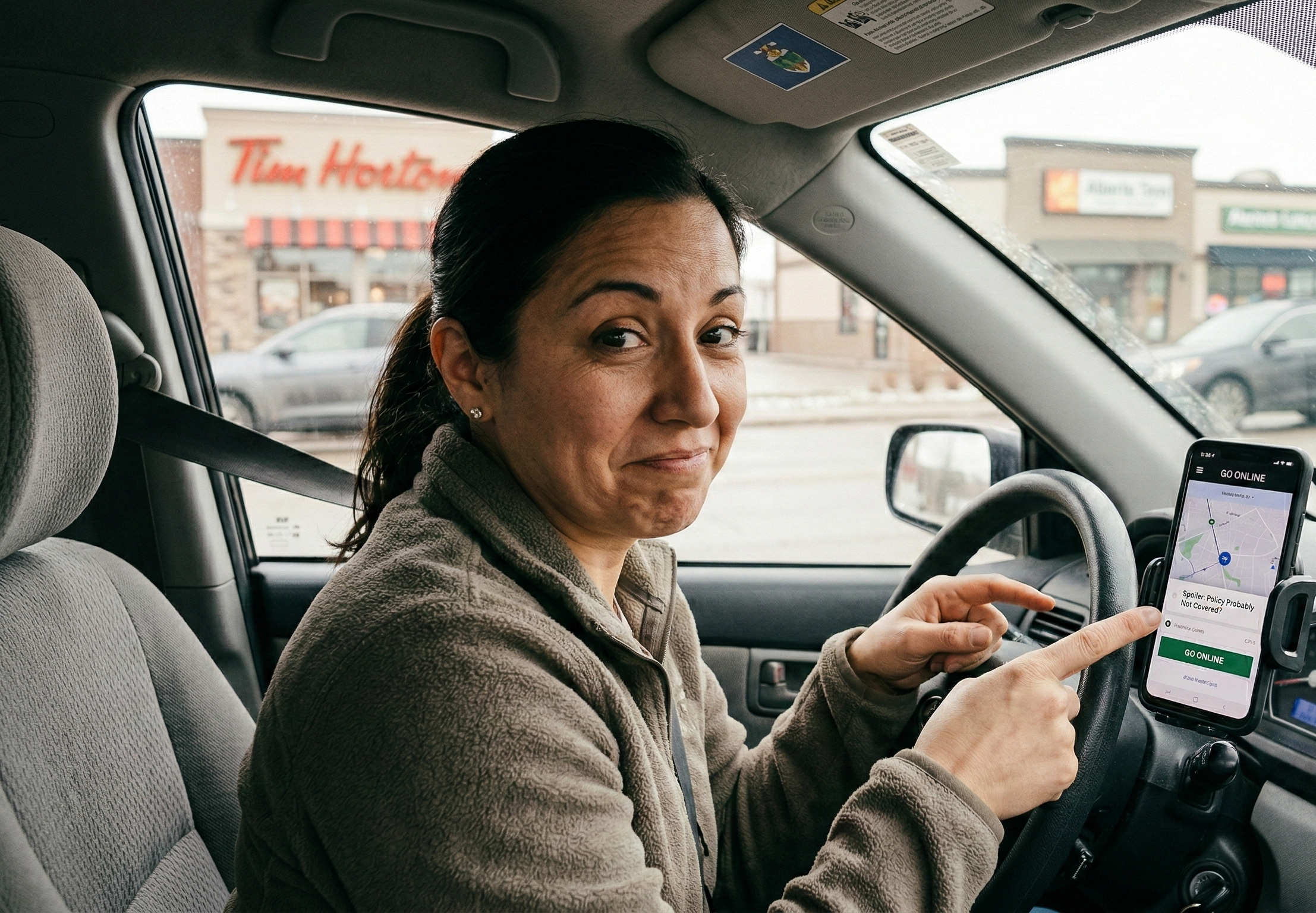
You decided to turn your car into a side hustle. You downloaded an app, slapped a sticker on your windshield, and are now officially ferrying strangers across town. It’s a great way to make extra cash, right up until you get into a fender bender and discover your personal auto insurance policy wants absolutely nothing to do with your new entrepreneurial spirit.
Personal auto insurance covers exactly that: personal use. The second you start charging people for rides, you enter the commercial zone. If you don't tell your insurance provider about your new gig, they can—and likely will—void your policy if they find out. It is a fantastic way to turn a weekend side hustle into a massive financial liability.
The good news is that your ridesharing employer probably provides a commercial policy while you are working for them. This is the case for Uber drivers here in Alberta, for instance. But how that coverage works depends entirely on what you are doing at any given second.
Think of your coverage in three distinct phases:
Offline: When your app is off, you are just a regular driver relying on your personal auto policy. (Your insurer still needs to know you rideshare on the side, though).
Between trips: When your app is on but you are just waiting for a ping, the rideshare company usually provides a minimal amount of coverage.
On trip: From the exact moment you accept a ride until you drop the passenger off, their full commercial coverage kicks in.
That constant transition leaves a lot of room for assumptions, and assumptions are exactly how coverage gaps happen. Your personal policy limits might be wildly different from what the rideshare company offers, and there are often strict stipulations around what they won't cover.
Before you pick up your next passenger, you need to do a little homework. Make sure your municipality actually allows ridesharing, and check your lease or financing agreement so your dealership doesn't penalize you for violating your contract.
Here is your checklist to avoid driving unprotected:
Download and actually read the ridesharing policy from your app provider.
Pay close attention to the limits of coverage and the exclusions.
Compare their coverage levels with your personal auto policy.
Tell us exactly what your ridesharing plans are.
Share a copy of your ridesharing policy with us.
As your locally owned independent broker, we can help you figure out where your personal policy ends and the commercial policy begins. How your coverage responds depends entirely on your specific carrier's wording and the rideshare company you work for.
You know what to do; Give us a call - 403 335 3442