
The Real Answer to "How Often Should I Change My Motorcycle Oil?"
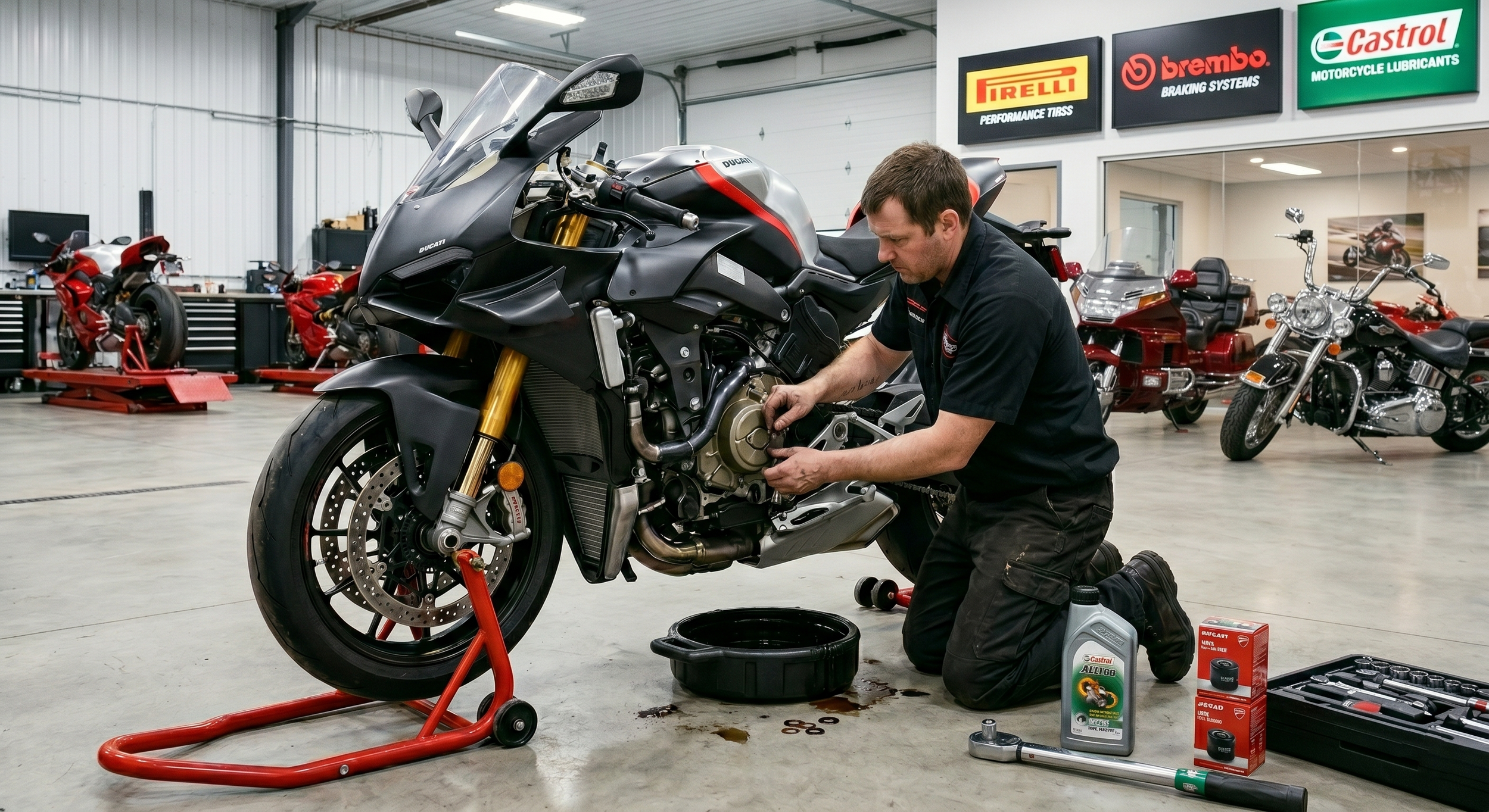
Let's be honest, asking a group of riders how often to change motorcycle oil is like asking them which tire brand is best. You are going to start an argument.
But whether you are meticulously adjusting the suspension preload on a Ducati Panigale or just dragging a vintage cruiser out of the shed, clean oil is the absolute cheapest insurance policy you can buy for your engine. If you wait until your motor sounds like a blender full of rocks, you are already looking at a massive repair bill.
Here is the actual breakdown of when you need to drop the oil, without the overly corporate fluff.
The Great Oil Debate: What Are We Pouring in the Engine?
Mineral Oil (The Old School Stuff): 3,000 to 5,000 km. This is essentially highly refined dinosaur bones. It breaks down incredibly fast under high heat. If you ride an older, air-cooled bike that gets stuck in stop-and-go traffic, this oil will cook.
Semi-Synthetic (The Middle Ground): 8,000 to 10,000 km. This is the compromise. It gives you a bit more life and better heat resistance without completely breaking the bank at the parts counter.
Full Synthetic (The Good Stuff): 10,000 to 15,000 km. This is the liquid gold. If you are running a modern, high-performance machine that revs to the moon, it demands full synthetic to resist shearing and handle extreme heat.
The Alberta Winter Factor (Why the Odometer Lies)
Mileage isn't the only metric that matters. Our riding season is painfully short, and we park our bikes in cold garages for six months of the year.
When an engine sits through an Alberta winter, condensation builds up inside the crankcase. That moisture mixes with the oil and creates a corrosive sludge.
If you only rode 2,000 km last summer, you still need to drop that oil. Never let dirty, acidic oil sit in your engine block all winter, and definitely don't start your spring riding season on last year's moisture-filled sludge.
Signs Your Bike is Begging for Fresh Oil
Don't just blindly trust the dashboard warning light. Watch for these actual, physical warning signs:
The Sight Glass Test: Put the bike on a rear stand and check the sight glass or dipstick. Fresh oil looks like translucent honey.
If it looks like thick, black coffee, it is entirely cooked.Clunky Gear Shifts: In most motorcycles, your engine oil also lubricates your transmission and your wet clutch. If shifting suddenly feels rough, or you find yourself hitting false neutrals, your oil has likely sheared and lost its viscosity.
The Angry Top-End: Degraded oil doesn't flow quickly enough to lubricate the valves at the top of the motor. If your engine starts sounding significantly louder or tick-ier than usual, do not ignore it.
The Smell Test: If your bike smells like a burnt frying pan after a short run down the highway, your oil is breaking down and failing to dissipate heat.
Wrenching in the Garage vs. Paying the Shop
Changing your own oil takes twenty minutes and saves you from paying $150-an-hour dealership labor rates.
It also gives you a perfect excuse to pull off the aftermarket fairings, check your exhaust valves, and make sure nothing is rattling loose from road vibrations.
But a word of caution: if you cross-thread the oil filter or over-torque the drain plug, you are the one footing the bill for a destroyed oil pan. If you aren't comfortable spinning a torque wrench, pay a trusted local mechanic.
The Insurance Reality
At the end of the day, an oil change costs fifty bucks. A seized engine costs thousands.
If your motor locks up at 110 km/h on the highway because you skipped basic maintenance, the resulting crash (and the massive towing bill) hits the insurance pool. When those entirely avoidable claims pile up, our collective insurance rates take the hit.
Keep your bike happy, and it keeps our premiums from climbing.