
As we move closer towards snow-covered everything and freezing temperatures that would make a Polar Bear want to head South, there is one thing that all drivers should have in mind by now - putting winter boots on your feet and on your vehicle.
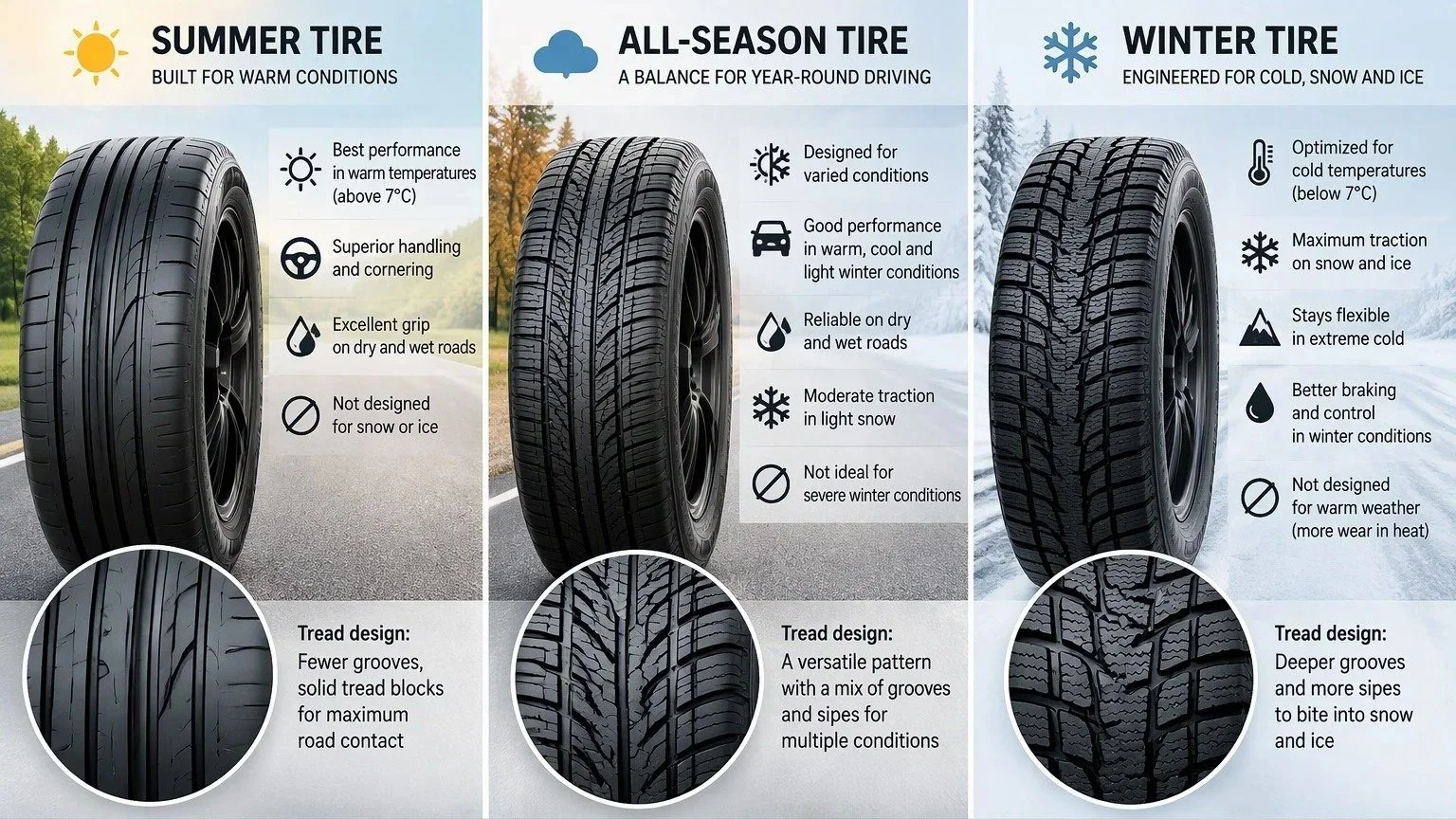
To begin, let’s touch on what qualifies as a winter tire. Scientifically - Winter tires are specifically engineered with rubber compounds that remain flexible in cold temperatures, allowing them to maintain traction and performance in winter driving conditions, including snow, slush, ice, and temperatures below 7°C. Practically - this could be the difference between making a corner or bend on the highway, or attending the ‘Annual Meeting of the Summer Tires Club’ in the ditch.
We wanted to discuss some of the Facts and Misconceptions when it comes to changing your tires over for the colder months. Unlike other Provinces in Canada, there is no law in Alberta that mandates you to make the change each season, but that does not mean they should be overlooked. When comparing the cost of winter tires to the added safety and peace of mind they provide, they can be a worthwhile investment.
We know that Tires are made from rubber, but what makes winter tires work better in the cold than the summer or all-season tire your car wears in the warmer months? The short answer is Silica, but there is a bit more to it than that - there are also some other elastomers, oils and additives that manufacturers add to the tires to enhance grip and performance. Keeping your tires softer adds better grip, but that’s just part of the equation - another big part is the tire design itself; namely, the treads. A high-silica tire isn’t going to add much winter grip without the grooves, channels and sipes that help them grab the road better when accelerating or braking than your standard tire.
Here's what surprises most drivers: you don't need snow or ice on the road to lose traction with all-season tires. Once temperatures drop below 7°C, the rubber compound begins to harden noticeably, which means that your summer or all-season tire loses its ability to conform to the road surface as well as it once did. Braking distances increase, steering response becomes less precise, and the vehicle can feel unsettled even on bare pavement. It may not be as noticeable when driving down your street, but it certainly changes when travelling at highway speeds.
While some premium all-season tires perform better than others in cooler conditions, none are designed to remain as flexible as winter tires in the -20°C to -30°C temperatures that we regularly experience through the winter deep-freeze. Here is some of the things to keep in mind when shopping for a Winter Tire:
High silica compound – One of the biggest differences between budget and premium winter tires is the amount of silica in the rubber. Higher silica content helps the tire stay flexible in cold temperatures, resulting in better grip when it matters most.
Sipe density – More sipes typically mean more biting edges, which translates into better traction and control on icy roads.
Directional vs. symmetric tread patterns – Directional tread designs excel at clearing slush and water, while symmetric patterns provide more flexibility for tire rotations and long-term wear management.
Speed rating – Always select a tire that meets or exceeds your vehicle's recommended speed rating to ensure proper handling and performance.
Other things to consider when shopping for your vehicle’s new winter shoes are the vehicle type you own - such as a Car, SUV, Truck or even Electric Vehicle, as these all have different ratings for Speed and Weight. Specifically, when it comes to the EV, they can be heavier than your standard vehicle mostly due to the large reinforced battery pack. Using the wrong winter tire type can lead to a tire under-performing or even bursting (in the instance of using a tire meant for, say, a Toyota Corolla and putting it on a Tesla Model S).
Lastly, one of the other important things to remember is to buy winter tires in sets of four. Your vehicle needs four points of grip, not two. Braking, steering, and cornering depend on traction at all four corners. Installing winter tires on only the front or rear axle can create unpredictable handling when road conditions suddenly change - and change suddenly they do in Alberta. Plus, AWD helps you go, not stop. Many drivers assume all-wheel drive is a substitute for winter tires - it isn't. AWD improves acceleration on slippery roads, but your tires are what determine how quickly you can stop and how well you can steer.
Unsure what tire is suitable for your vehicle? Reach out to your local tire shop, and they will be happy to explain to you which is the best tire for you and your budget. You can also compare some of the best winter tires here for more information.
Once you put on the ol’ snow shoes for your vehicle, reach out to our office to inquire if your auto insurance offers a discount for having Winter Tires!