
Speed. Risk. Reality: Didsbury Traffic Stats You Should See
Wake up [insert significant other’s name here], the most recent Didsbury Community Peace Officer statistics just dropped!
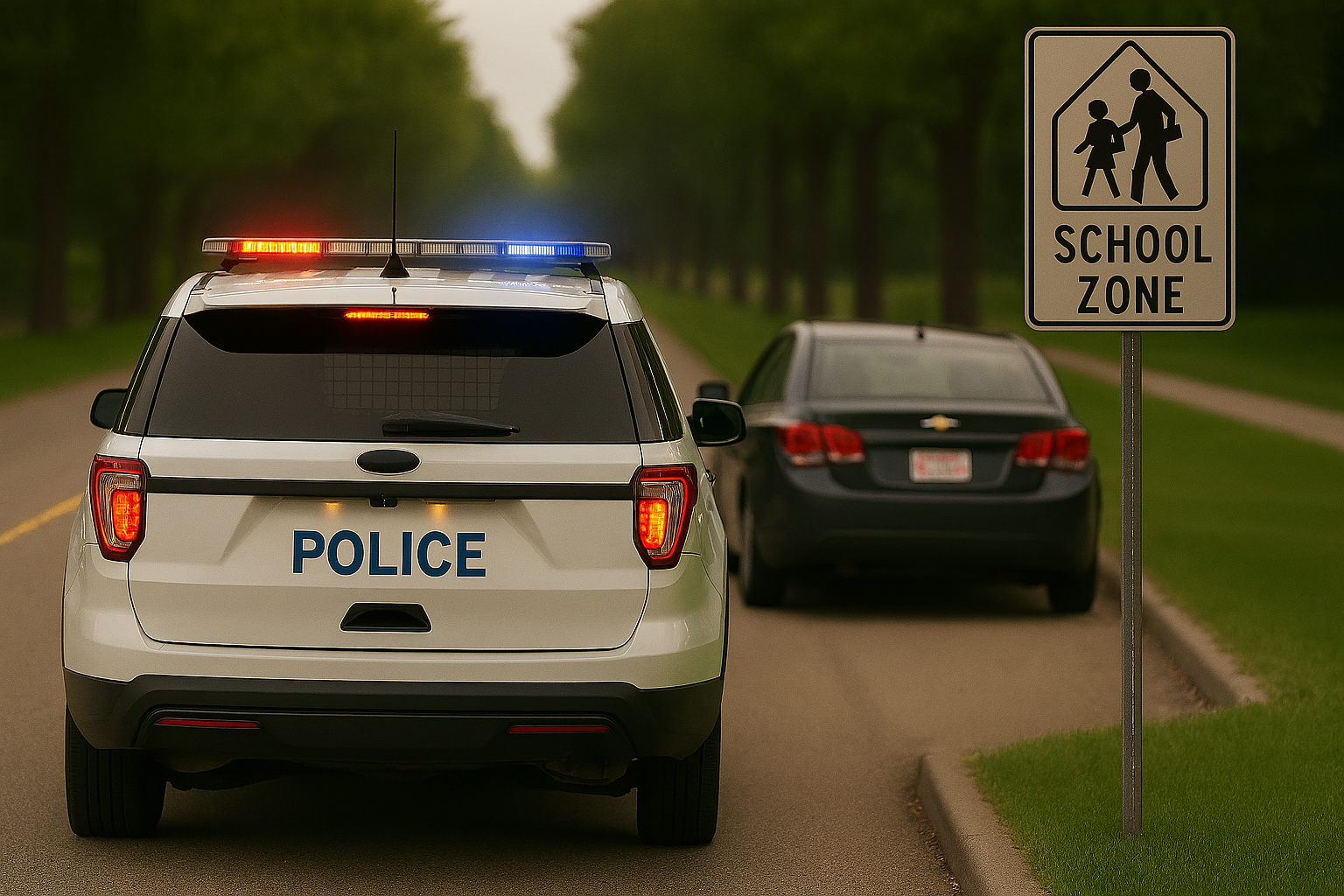
In local news, you may have seen a recent article that discussed how speeding in school and playground zones remains a significant concern in Didsbury, prompting plans to increase enforcement. In a report to town council, the Chief Administrative Officer outlined the town’s Traffic Safety Plan and the role of Community Peace Officers (CPOs), who dedicate an estimated 30–40% of their time to traffic enforcement.
They noted that they have paid particular attention has been drawn to Secondary Highway 582, identified as a consistently busy area with frequent speeding issues. The town includes two school zones and eight playground zones, adding to enforcement priorities.
Traffic data from 2020 to 2024 shows 235 collisions in Didsbury, averaging 47 annually, with a small portion involving injuries. Most collisions occurred during fall and winter, often linked to road conditions, intersections, and weather, and were concentrated during peak commuting hours. In 2025, enforcement efforts resulted in hundreds of tickets, including 521 for speeding and 115 for stop sign violations, highlighting ongoing concerns about speeding, failure to stop, and a growing trend of distracted driving.
For 2026–2029, a Traffic Safety Plan emphasizes increased monitoring in school and playground zones, especially during pickup, drop-off, and commuting times, along with continued collaboration with RCMP. The town also plans to track enforcement and education efforts annually. Additionally, council will consider lowering downtown speed limits from 50 km/h to 40 km/h as part of a broader traffic bylaw review, with further discussions expected.
Now what does all of this have to do with insurance, you might ask? Well, in short - everything! But… let’s elaborate on this some more.
What this information tells us is that there are a lot of local folks who are receiving tickets for speeding or other ‘minor’ (note the quotations for minor) infractions, and this is where insurance comes in to play. First, you receive the speeding ticket from the officer, and a fine goes along with it - no harm, no foul, right?. Then, on your next auto insurance renewal, you may see a new line on there under “Convictions”, and if you don’t have a Minor Conviction Waiver endorsement active on your policy, then this ‘minor’ is being rated against you for the next three years!
Shifting from ‘minor’ to ‘major’, let’s look at Distracted Driving - yes, I know, we (along with everyone else you know) have probably talked about this at length, but… have you really stopped to think about some of the statistics?
Distracted drivers stats include some of the following:
In Canada, about 47% of drivers admitted to sending a message while driving.
In Alberta, drivers using a hand-held device are 8 times more likely to crash or nearly crash.
Distracted driving is responsible for around 25% of road fatalities in Alberta
For a deeper dive into this, visit our November 2026 blog post “Distracted Driving: Who Needs Low Insurance Rates Anyway?” at the following link: www.mcins.ca/resource-centre/distracted-driving-who-needs-low-insurance-rates-anyway.
Okay, so you’re perhaps saying to yourself “I can multitask” or “I have done this dozens of times and nothing bad has ever happened”, and you may be right - to a degree. It only takes one moment for that to change, and for a police officer or peace officer to pull you over and issue a traffic infraction or - for something worse to happen.
All that said, maybe we should touch on something else that insurance companies have now been doing to be more pro-active for those who accumulate too many traffic convictions in short succession.
Let’s use a quick example:
Let’s picture you pick up a nice new 2025 Ford F150 that has financing for the next 7 years. Over the next year or two, you accumulate a speeding infraction, a stop sign infraction and a distracted driving infraction. That is hard on your wallet and maybe your street cred - but here is what you don’t often hear about… it makes you harder to insure. Insurance companies are now beginning to increase your Comprehensive and/or Collision deductibles to $2500, if they even leave them on - in some cases, they can even remove them completely.
Lienholders (that is, the companies that finance your car loan) typically require you to maintain Comprehensive and Collision coverage as long as you still owe money on the vehicle. If this happens, your insurance costs could rise a lot - sometimes doubling - or you might have to move to Facility Insurance, which is usually where drivers end up when other insurers won’t cover them. Don’t have an insurance company decline this coverage because you exceeded the posted speed limit or just HAD to check this meme your buddy just sent as you’re still behind the wheel. Let’s keep that phone down and your eyes up on the road.
Keeping our roads and kids safe by making responsible choices every time you get behind the wheel is priority one. Following posted speed limits and slowing down in school and playground zones helps protect children and families who depend on drivers to be alert and cautious in these high-risk areas, and respecting them shows a commitment to the safety of the entire community.
Driving responsibly also benefits you directly by keeping money in your pocket and out of the hands of enforcement and insurance companies. Avoiding tickets, fines, and increased insurance rates means more financial peace of mind, while also contributing to safer streets for your community.