
Let’s Talk a Little Bit About Hail
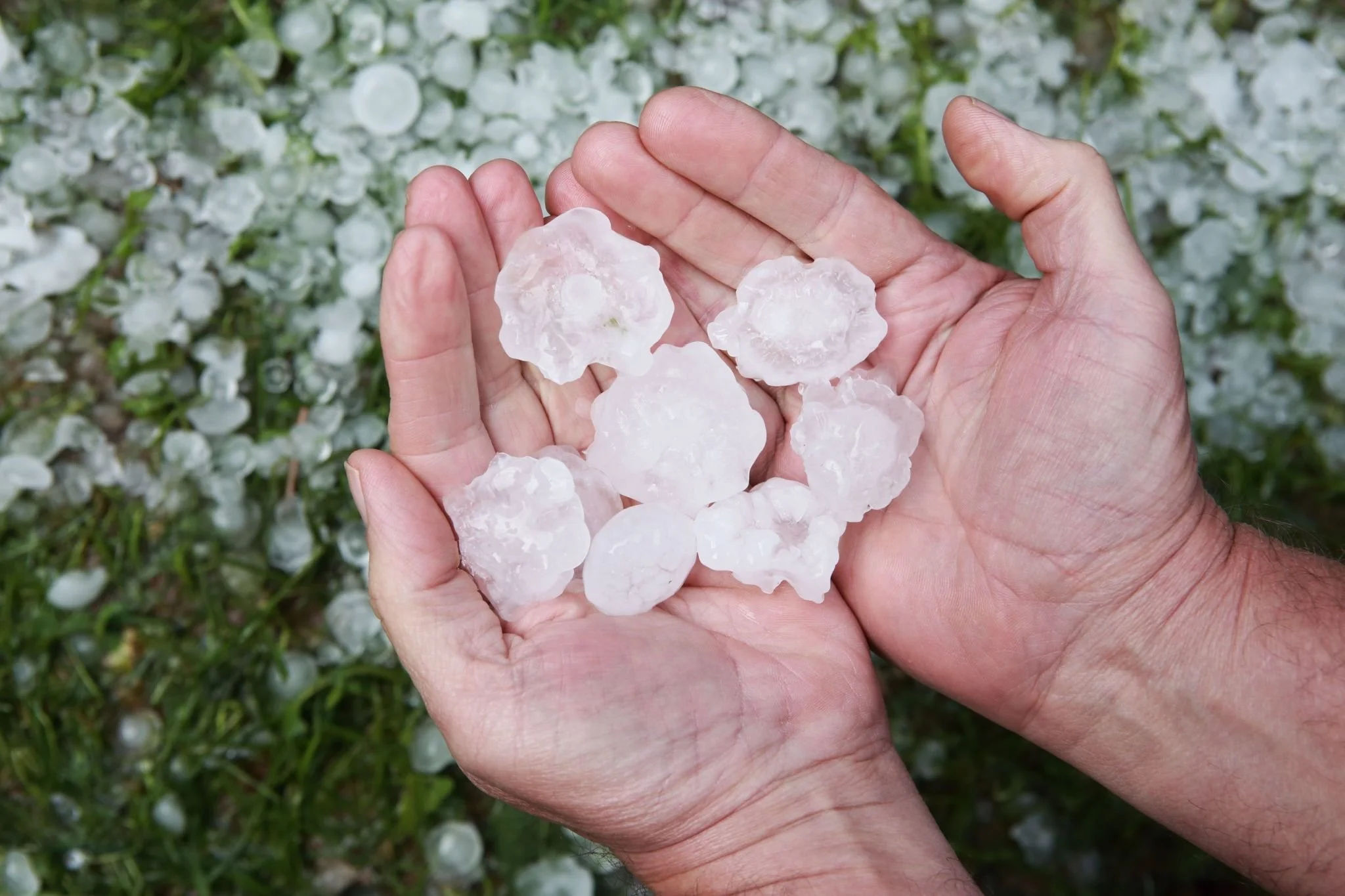
We all know what hail is - or do we? We understand the basics about it, and the damage that can follow a hailstorm… but have we considered what Hail actually is and what causes it? Let’s take a small dive into the world of hail!
What it Is:
Hail is a type of precipitation made of solid ice that forms inside powerful thunderstorms. It develops in strong upward-moving air currents, known as updrafts, which carry water droplets high into extremely cold regions of the atmosphere. Hail can be dangerous, causing damage to vehicles, homes, and aircraft, and posing risks to people and animals.
Hailstones begin forming when raindrops are lifted by these updrafts and freeze in the cold upper parts of a storm. As they move through the cloud, they collide with supercooled water droplets that freeze onto their surface, making the hailstones grow layer by layer. Depending on how quickly the water freezes, the ice can appear either cloudy (with trapped air bubbles) or clear. These layers can change as the hailstone moves through different parts of the storm with varying temperatures and moisture levels.
Eventually, hailstones fall to the ground when they become too heavy for the updraft to support or when the storm weakens. Their path downward can be influenced by wind, which may blow smaller hailstones away from the storm’s core while larger ones fall closer to the updraft. In strong winds, hail can even fall at an angle or sideways, increasing its potential to break windows, damage buildings, and cause injury.
The Fall from the Sky:
The speed at which hail falls depends largely on its size, shape, and surrounding wind conditions. Smaller hailstones typically fall at speeds between about 30 to 70 km/h, while larger ones from severe storms can reach speeds exceeding 160km/h, however, these speeds can vary widely due to differences in melting, air resistance, and storm environment. This is how hail can shred vinyl on a home in 5 minutes flat!
Hail is most common in certain regions, especially in parts of the Central Alberta known as “hail valley,” where towns and cities spanning from High River up to Lacombe frequently experience hailstorms. These storms can leave streaks of damage called hail swaths, which may stretch for miles. Hailstones vary in size from tiny pellets to very large chunks of ice; Canada's largest recorded hailstone fell northwest of Markerville, Alberta, on August 1, 2022. Recovered by the Northern Hail Project, the massive stone weighed 292.71 grams and measured 123 millimeters in diameter - that’s the same size and weight of your average grapefruit, except made of solid ice!
The Aftermath:
Alright, we got the science of the hail, but let’s visit the damages it has caused in the past. We have seen some of the damage and we may know some of the numbers, but we are going to take a closer look at the costs and everything associated with it.
The IBC - that is, the Insurance Bureau of Canada - documented that the Summer 2024 Calgary hailstorm resulted in more than 130,000 insurance claims and more than $3 billion in insured damage. The bureau said the storm was the second-costliest disaster in Canadian history, behind the 2016 Fort McMurray wildfire. Take a second to let that marinate… hail is becoming nearly as costly as a fire that consumed nearly 5900 Square Kilometres of land, including approximately 15% of the nearby town.
The toll that these claims have on the insurance industry then go on to affect everyone, as the premiums you and I pay go into a shared fund - this is Insurance 101; only a small percentage of people will experience a disaster or accident in any given year, and the insurance companies use that pool of money to pay for the expensive claims of the few, except, the few are starting to become the many when we look at recent hail claims. This has contributed to the average rate increase since December 2020 of about 55.8% - above the National average of 38.6% (you can read more on this at our recent post here).
What Homeowners can do Now for the Future:
Building a more climate-resilient home in Alberta involves strengthening your structure to handle extreme conditions such as hailstorms, high winds, and wildfires, which will lessen damages while decreasing premiums over time. Plus, many insurers offer a type of incentive for you to rebuild your home with stronger materials in the event of a claim - for example, if you add the Stronger Home Coverage on a Wawanesa policy today, if you have a claim in the future, Wawanesa's Stronger Home Coverage helps you repair or rebuild your home with more resilient materials after a claim by providing an additional $25,000 specifically to upgrade damaged roofing or siding to sturdier, damage-resistant options, which we will touch on next.
Key upgrades should prioritize materials and construction methods designed to withstand Alberta’s climate. For roofing, Class 4 impact-resistant shingles, metal, or rubber roofing significantly improve resistance to hail damage. Exterior siding choices such as fiber cement board, metal, or engineered wood offer better durability and fire resistance compared to traditional vinyl, which can crack, shatter and shred during hailstorms. Additionally, improving the foundation with proper waterproofing and using advanced framing techniques or exterior foam insulation helps enhance structural integrity, boost energy efficiency, and reduce heat loss through thermal bridging.
Before construction, it’s important to address permits, financing, and insurance. Before starting your rebuild, confirm all required development and building permits with your municipality to avoid delays or compliance issues. Reviewing your insurance policy with one of our brokers before finalizing your rebuild ensures that upgraded materials are properly covered and may even lead to lower premiums due to reduced long-term risk.
Questions? We’re here to help! Call us at 403-335-3442 or come into our office to discuss more about hail coverages.