
Benefits and Drawbacks of e-Bikes
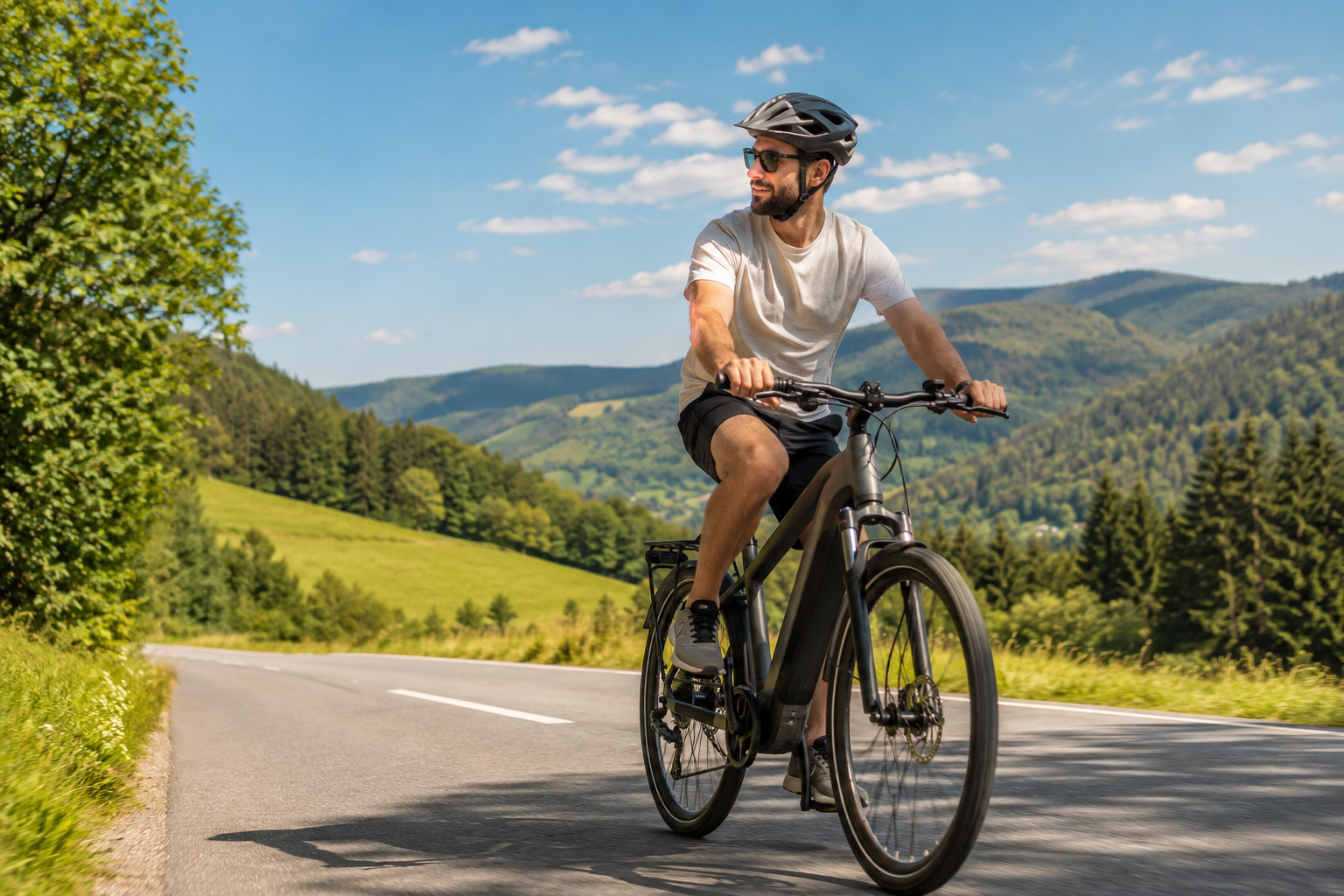
Electric bicycles were initially created to assist riders with challenging climbs and to provide extra support during lengthy trips. Over time, however, they have become increasingly popular with people seeking a lower-cost alternative to car ownership, some of whom have faced criticism for unsafe riding behaviour.
Alberta doesn't technically classify them as e-bikes. Under provincial law, they're known as “Power Bicycles”, and ownership comes with fewer requirements than many people assume: riders do not need a driver's licence, vehicle registration, or insurance. However, the regulations are not as straightforward as they may appear.
Calgary prohibits throttle-only operation on pathways, while Edmonton imposes a minimum $250 fine on riders aged 17 and older for sidewalk violations. National parks such as Banff and Jasper enforce separate federal regulations, adding another layer of complexity. And perhaps most surprisingly, riding a power bicycle while impaired can still result in DUI-related charges, a fact many riders are unaware of.
Industry sources say modifying e-bike motors to increase speed or power is relatively simple and widely practiced among some riders. As a result, concerns are growing that many e-bikes may be operating beyond the limits intended by regulators.
Policymakers will eventually need to address the issue because e-bikes differ significantly from conventional bicycles. Their greater weight and speed can increase the severity of collisions, injuries to both the rider and those who they may collide with, as well as property damage. While traditional bicycles have long been exempt from licensing requirements, questions whether it remains appropriate to treat high-powered e-bikes as anything other than motor vehicles.
Rules and Regulations in Alberta
Alberta regulates e-bikes under its own Traffic Safety Act framework, and while Canada's former federal definition of a power-assisted bicycle once existed under the Motor Vehicle Safety Regulations, that provision was repealed in 2021. As a result, the rules governing how e-bikes/ power bicycles are used on public roads are now established by each province and territory, although most jurisdictions follow standards similar to Alberta's.
To qualify as a power bicycle in Alberta, it must satisfy several key requirements:
An electric motor rated at no more than 500 watts
A top assisted speed of 32 km/h on level ground
Functional pedals that allow the bicycle to be propelled solely by human power
A permanent manufacturer-installed label identifying it as an e-bike, power bicycle or power-assisted bicycle
Alberta law specifically excludes power bicycles from the definition of a motor vehicle. That distinction is significant because it means riders are not required to hold a driver's licence, register the vehicle, or carry insurance. Instead, power bicycles are generally treated the same as conventional bicycles under provincial traffic laws, subject to a limited number of additional requirements that apply specifically to electric models.
However, If an e-bike/ power bicycle exceeds Alberta's 500-watt power limit or lacks fully functional pedals, it no longer qualifies as a power bicycle under provincial legislation. Instead, it is considered a motor vehicle, bringing it under the licensing, registration, and insurance requirements that apply to motorized transportation. Its specific classification, whether as a moped or a motorcycle, is determined by the vehicle's overall design and technical characteristics, not simply by the size of its motor.
Where Can you Ride your Power Bicycle?
Power bicycles are permitted on all public roads in Alberta under the same rules as motor vehicles (AR 304/2002, s.75). You ride as near as practicable to the right curb or edge, use paved shoulders where available, and travel single file (AR 304/2002, s.77–78).
Specifically, you can ride on a Public Road, following the same rules as motor vehicles or motorbikes, in Bike Lanes and some Shared Pathways (with different conditions in each city). Power Bicycles are prohibited on certain public roads, such as some (but not all) highways and sidewalks in Calgary and Edmonton.
The grey areas appear outside of Calgary and Edmonton, however, and different laws and regulations apply once in a different town, city or jurisdiction. This is why you may not see a Power Bicycle on some walkways or sidewalks, but electric scooters will fly past you on those same areas.
In Didsbury specifically, there is no set rules or regulations specifically in place (at the time of writing this blog post), and the Alberta Traffic Safety Act is to be followed;
An electric motor rated at no more than 500 watts
A top assisted speed of 32 km/h on level ground
Functional pedals that allow the bicycle to be propelled solely by human power
A permanent manufacturer-installed label identifying it as an e-bike, power bicycle or power-assisted bicycle
An approved bicycle or motorcycle helmet is legally mandatory while riding
Riders in Alberta generally must be 12 years of age or older to operate a power-assisted bicycle.
Must have functional brakes, plus working headlamps and taillamps/reflectors if driven after dark.
Permitted on Roadways, closest to the curb and prohibited on sidewalks
Rising Costs Could Slow Adoption
The long-term growth of e-bike use may ultimately depend on economics. If provinces begin requiring licensing and insurance for a broader range of e-bikes and actively enforce those rules, much of their affordability advantage could disappear.
One of the key attractions of e-bikes is their relatively low cost. Many models sell for under $1,000, making them an accessible transportation option for a wide range of consumers, especially in larger cities. However, if more e-bikes are categorized as motorcycles, owners could face substantial additional expenses. Motorcycle insurers often view riders as representing annual risks worth several thousand dollars, which is reflected in pricing. If similar costs began applying to e-bike owners, the economics would change dramatically.
So, whilst typically lower priced and better for the environment that your standard moped that uses gasoline, there are a lot of grey areas on some rules and regulations to their use, which could quickly add up in fines depending on where you ride.
Other Things to Note
All e-bike/ power bicycle riders in Alberta must wear a helmet, but it has been changed over the years. At first, previous to 2018, it was Mandatory for all power bicycle riders to wear an approved motorcycle helmet. Since November 2018, the law was updated to include the use of an approved bicycle helmet as well - but you can still use the motorcycle helmet if you would prefer!
Contrary to what people may believe - you can receive a DUI on an e-bike or power bicycle, even though a license is not required for these bikes. The Criminal Code of Canada (Section 320.14) makes it an offence to operate a "conveyance" while impaired. The Criminal Code defines "motor vehicle" as anything "propelled by any means other than muscular power" (Section 2) — a broader definition than Alberta's provincial law, which states impaired driving provisions (Section 88) apply only to operators of a "motor vehicle". An e-bike with its motor engaged fits the definition of a vehicle propelled by any means other than muscular power.
In Conclusion
There is no legal requirement for insurance on these e-bikes/ power bicycles in Alberta at this time, but that doesn’t mean you should forego the insurance altogether! There are some options where you can insure your e-bikes/ power bicycles at our brokerage which include liability, personal accident, physical damage and theft coverages at a low cost.
Example:
CycVerve All-Terrain Electric Bike - Retail Value: $1399.99
$1 Million Liability Coverage
Personal Accident Coverage
All Perils Coverage, $250 Deductible (Theft Deductible of $1000)
Approximate Quote for Coverage: $310.00
At this time, insurance is relatively affordable in comparison to auto insurance market (see our blog posts on why auto insurance rates are increasing here and here), and it can be more beneficial for the environment and your health - a win-win all around!
We understand this is a year-round solution in our area (we see you, Winter Season), however this is still a great late Spring to early Fall way to get around town.
Contact our office for more information or for a quote!