
Why You’re Paying for Other People’s Lies
March is officially Fraud Prevention Month in Canada.
Usually, when people hear the words "insurance fraud," they picture a victimless crime involving a massive, faceless corporation. They assume some billionaire is just missing out on a third yacht.
Here is the frustrating thing though: insurance companies don't pay for fraud out of their own pockets. They pay for it using the collective pot of premium dollars collected from honest drivers and homeowners like you (ermm, and ME!).
When someone lies on a claim, our rates go up to cover the difference. It’s that simple.
To celebrate Fraud Prevention Month, let's look at a few of the most common scams making the rounds in Alberta—and how they are draining our wallets.
The "Opportunistic" Tow Truck
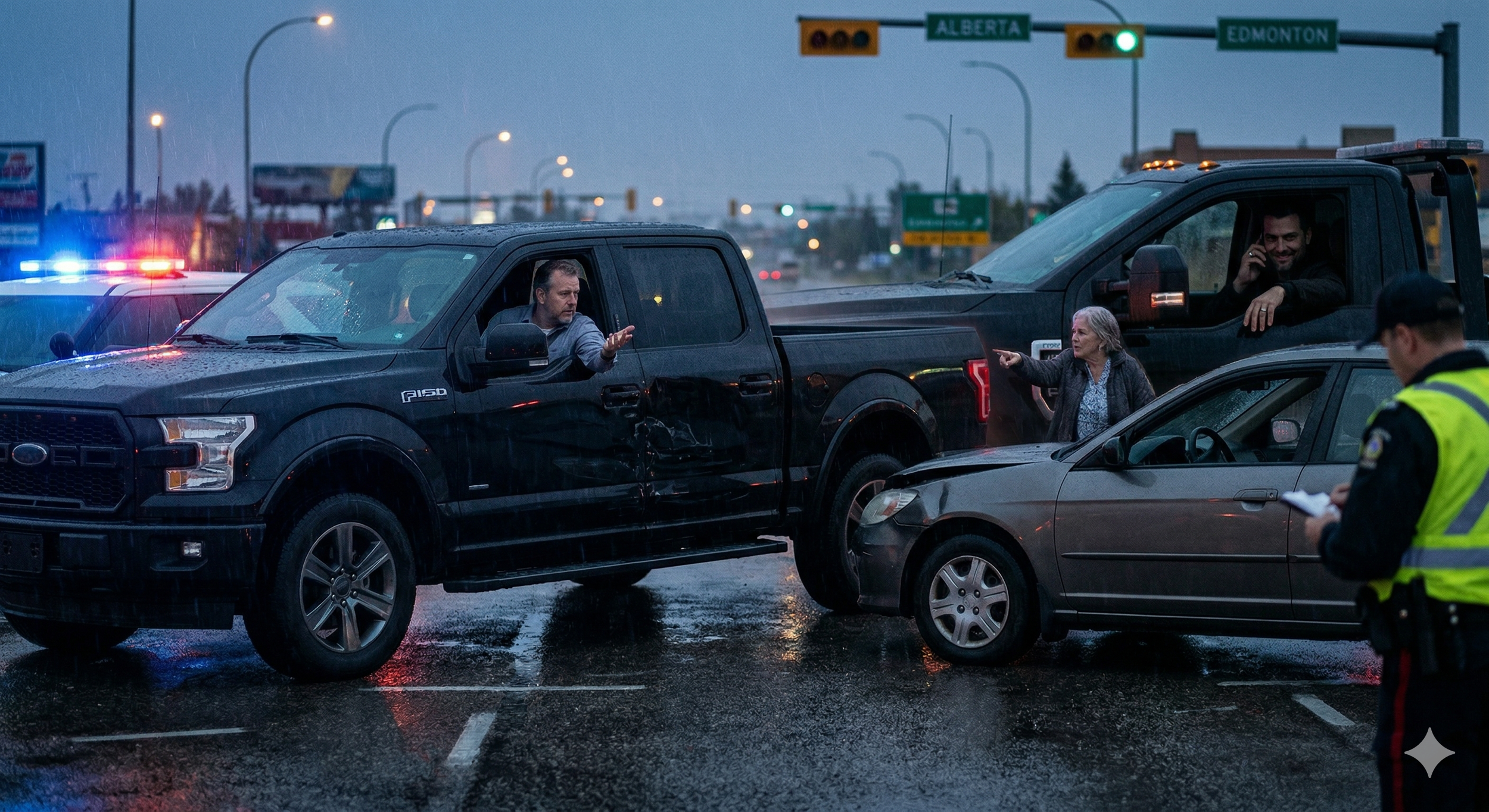
You get rear-ended on the QE2. Before the dust even settles, a tow truck appears out of thin air. Magical.
The driver is super helpful, insists on hooking up your car immediately, and pressures you to sign a blank work order. A week later, your insurance company gets a bill for thousands of dollars in "storage fees" and wildly inflated repair costs from a shady body shop.
The "Owner Give-Up" (Staged Theft)
Sometimes people buy an $80,000 truck on a 96-month loan at 11% interest and suddenly regret their life choices.
Instead of selling it at a massive loss, the truck mysteriously "disappears" from their driveway in the middle of the night. A week later, it’s found burnt to a crisp in a ditch outside of Airdrie, or it's currently sitting in a shipping container headed overseas.
The owner files a theft claim, hoping the insurance premium pool will magically wipe out their terrible financial decision.
Spoiler alert: claims adjusters and Special Investigation Units (SIUs) investigate highly convenient vehicle fires very, very closely.
The "Magic" Basement Inventory
A sewer backs up in a neighborhood, ruining a bunch of basements. Suddenly, every single house on the block claims they lost a brand-new, 85-inch 8K OLED TV, three PlayStations, and a collection of rare vintage guitars.
Exaggerating a claim is the most common type of insurance fraud. It’s also why claims adjusters demand receipts and photos before writing a cheque.
The Phantom Passenger
Two cars bump into each other in a grocery store parking lot at 10 km/h. It’s a minor fender bender with only the two drivers present.
Three weeks later, the at-fault driver's insurance company receives a lawsuit for "severe whiplash" from three passengers who materialized in the back seat of the other car after the collision.
The "Polite Wave"
This one hurts because it weaponizes courtesy.
You are trying to pull out of a busy parking lot or a side street. A driver in the right-of-way lane stops, makes eye contact, and gives you a friendly wave to let you merge in.
The second you hit the gas to pull out, they floor it and T-bone your vehicle.
When the police arrive, the fraudster develops amnesia. They swear they never waved and that you just recklessly pulled out in front of them. Without a dashcam, it is their word against yours—and legally, you are the one who failed to yield.
How You Can Protect Your Own Premiums
You can't control what other people do, but you can protect yourself from being an accidental accessory to a scam.
Take a thousand photos: If you are in an accident, photograph the damage, the license plates, the surrounding intersection, and the exact number of people in the other vehicle. If that is to much to remember - put the camera into video, spin in a circle, and record it all.
Never sign a blank document: Whether it's a tow truck driver or a roofing contractor assessing your house after a hail storm, never sign a blank work order.
Call us first: If something feels off after a crash or a home claim, call us here at the brokerage. We can point you toward certified, reputable repair shops and navigate the chaos.
If you ever suspect someone is trying to pull a fast one on a claim involving you, let us know.