
The AI Insurance Guide: Bridging the Gap Between Data and Decisions
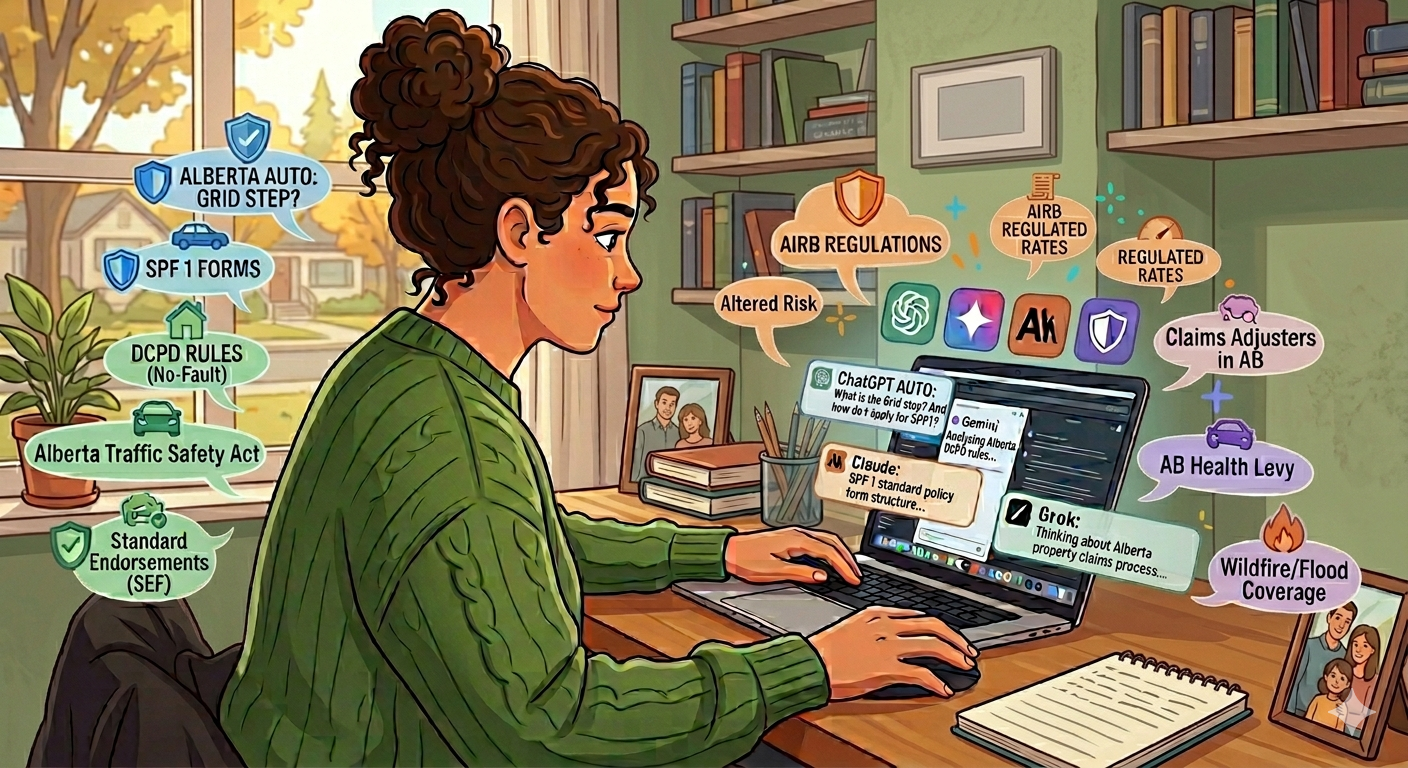
Navigating the world of insurance often feels like learning a second language. With the emergence of AI tools like Gemini, ChatGPT, and Grok, our clients now have a 24/7 "translator" at their fingertips. However, using AI for insurance is a balancing act: it’s an incredible educational resource, but a terrible risk advisor.
Where AI Shines: Your Personal Insurance Translator
AI excels at processing vast amounts of general information and presenting it in a way that is easy to digest. Here is how it adds value to your research:
Decoding the Dense Jargon: Insurance policies are filled with "legalese" that can sometimes be intentionally opaque or ambiguous. AI can take a complex term like Loss of Use or Subrogation and explain it using real-world analogies. It acts as a bridge, ensuring you don’t get overwhelmed by technical vocabulary.
Breaking Down Coverages & Deductibles: Understanding the "inverse relationship" between a deductible and a premium is a classic hurdle. AI can run hypothetical scenarios for you—showing, for example, how raising a deductible from $500 to $1000 generally lowers the monthly cost, helping you visualize your risk tolerance. However – these are hypothetical scenarios and these “quotes” that may be provided can be wildly out of sync with the actual market.
Speeding Up the Information Phase: Instead of hunting through a 50-page PDF of a Summary of Benefits, you can ask an AI, "Does a typical Auto Insurance policy include coverage for all my glass, or does it exclude my windshield?”.
Decision Support: AI can help you "think through" a life change. If you tell an AI you just bought a home and have a child on the way, it can provide a checklist of coverages to consider, such as Homeowners insurance or Term Life insurance, ensuring you have a baseline of knowledge before speaking to a professional.
Where AI Falls Short: The "Human-Only" Zone
While AI is great at "knowing things," it is not entirely great at "doing things" in a regulated environment. Here is why the human element remains non-negotiable:
The Inability to Provide Accurate Quotes: A real insurance quote is a complex calculation involving your claims history, credit-based insurance scores, and specific geographic risk data (like wildfire or flood zones). AI models do not have access to these private, real-time databases. Any "quote" an AI gives is merely a statistical guess based on old data.
The Risk of "Hallucinations": AI Tools work by predicting the next most likely word in a sentence. Occasionally, they can confidently invent a "standard policy exclusion" that doesn't actually exist. In insurance, relying on a hallucination - that is, something that the AI almost completely creates or “makes up” - isn't just a minor error; it can lead to a denied claim or an uninsured catastrophe.
Limited Databases and "Knowledge Cut-offs": Insurance laws are hyper-local and change frequently. For instance, if the Alberta Government passes new legislation regarding auto insurance minimums today, an AI model trained six months ago won't know about it. This lag can lead to advice that is legally outdated.
AI is Not an Underwriter: Underwriting is the art and science of risk selection. It requires human judgment to look at "gray area" cases—like a historic home with unique architectural features or a driver with a complex medical history. AI cannot negotiate with a carrier or advocate for a policy exception; only a licensed agent or underwriter can do that.
Legal and Compliance Liability: If an AI gives you incorrect advice that leads to a financial loss, there is no "malpractice insurance" for the chatbot. A licensed agent, however, carries Errors and Omissions (E&O) insurance, providing you with a layer of legal protection and accountability that a machine cannot offer.
The Final Verdict: Use AI to Learn, Use Humans to Lock In
The most effective way to shop for insurance in 2026 is a hybrid approach. Use AI to summarize your options, define terms, and prepare questions. Then, take that knowledge to a licensed professional who can verify the data, run accurate numbers, and legally bind the coverage that protects your future.
Questions? Give us a call at 403-335-3442 and we will be happy to clarify what your preferred AI Tool is trying to say.