
Sump Pumps: The Heroes Keeping Your Basement Dry
If you read our recent post on Backwater Valves, you already know that Alberta homeowners have a lot to gain by investing in flood prevention.
A backwater valve keeps sewage from flowing into your home — but what about groundwater and rainwater trying to get in from the outside?
That’s where your sump pump earns its keep.
When the sky opens up and stormwater starts to rise, your sump pump protects everything you love in your basement — flooring, furniture, keepsakes, the works. It’s not glamorous, but it’s one of the hardest-working systems in your house.
What a Sump Pump Does
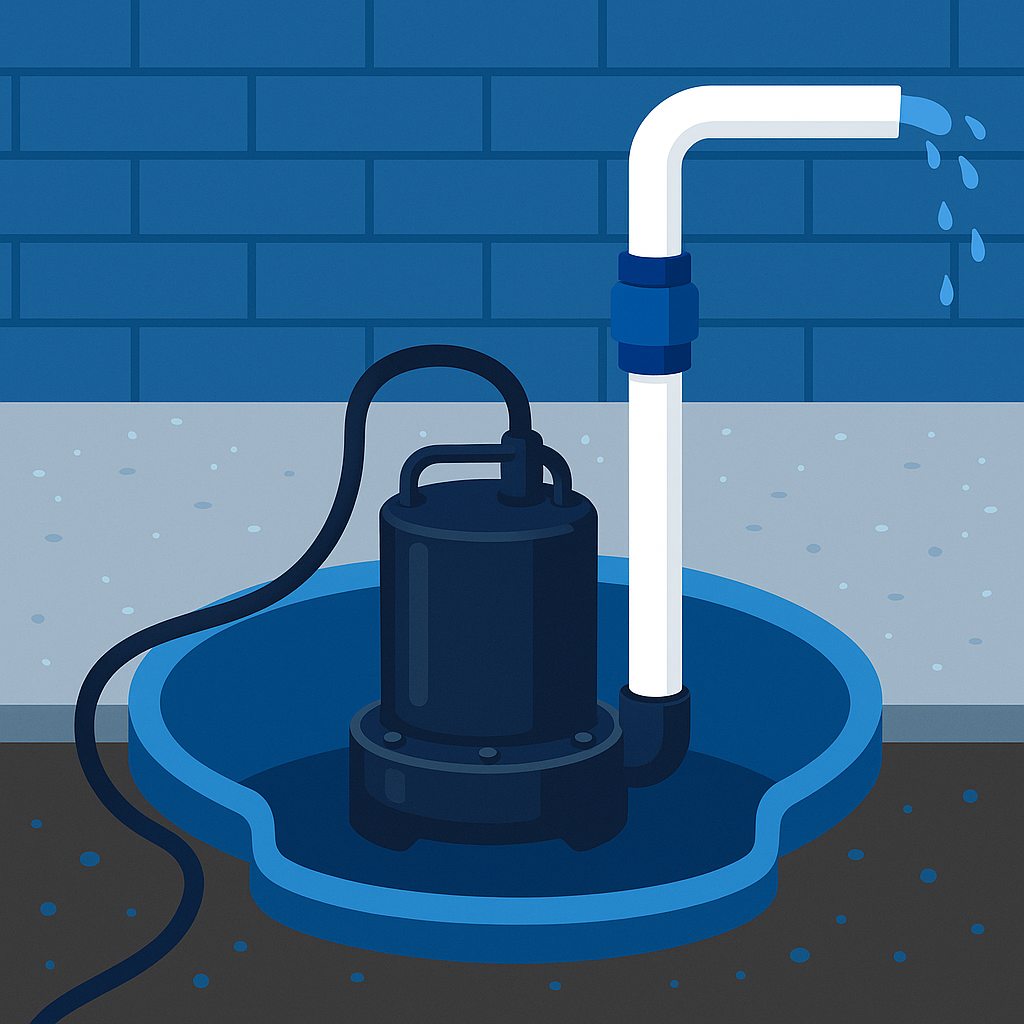
A sump pump collects groundwater and surface runoff that drains toward your home’s foundation through footing drains or weeping tiles.
When that water fills the sump pit, a float switch activates the pump — sending the water safely up and out of your home.
In many Alberta municipalities, sump systems are now required when homes disconnect their foundation drains from sanitary sewers. It’s one of the most important upgrades you can make to protect against flooding and insurance claims.
How It Works
Water enters the sump pit from perimeter drains.
Float switch rises as water level increases.
Pump activates, pushing water up through the discharge pipe.
One-way check valve stops water from flowing back down.
Pump shuts off when the pit is empty.
A small plastic check valve might be the cheapest insurance you’ll ever buy — without it, your pump can “recycle” the same water endlessly until it burns out.
Why It Matters Alongside a Backwater Valve
When you install a backwater valve, you’re protecting your home from sewer backups during city system overloads.
A sump pump, on the other hand, prevents foundation flooding when groundwater rises or rainwater can’t drain away fast enough.
Together, they’re the one-two punch of basement defense.
Just make sure they’re installed correctly — if your weeping tile is still tied into your sanitary line, a backwater valve could actually cause self-flooding when it closes during a storm. That’s why cities like Calgary and Edmonton now require weeping tiles to discharge into a sump before a valve is added.
Common Reasons Sump Pumps Fail
Even the best systems need attention. The most common failures include:
Float switch jammed or waterlogged (it can’t rise).
Pump burnout from overuse or debris. (See One-way check valve above)
Power outages during storms — when you need it most.
👉 Test it monthly: pour water into the pit until the float rises, and make sure you see water discharging outside.
Smart Upgrades to Consider
If your sump pump works hard during storms, build in redundancy:
Secondary pump: automatically kicks in if the main one fails.
Battery backup: keeps the system running through power outages.
Water-powered backup: uses city water pressure to pump (not for wells).
Alarm system: sends phone alerts if water levels rise dangerously.
For newer homes, smart pumps can even connect to Wi-Fi and send system diagnostics or power alerts directly to your phone.
Maintenance Checklist
Every 3 months
Check float movement and discharge line.
Clean debris or gravel from the pit.
Inspect the check valve for leaks.
Annually
Test by filling the pit with a hose.
Replace worn seals and O-rings.
Confirm the discharge pipe drains well away from the foundation.
If you see oil in the pit, that means a motor seal has failed — replace the pump immediately.
Seal It, Cover It, Forget It (Almost)
Small upgrades that make a big difference:
Airtight sump covers: Keep debris out, prevent radon entry.
Radon-rated lids: Improve air quality and energy efficiency.
Discharge extensions: Carry water 6+ feet from your foundation.
Check these before the next storm — not after.
Our Take
At McDonalds Insurance, we’ve seen firsthand how a $1,000 flood-prevention system can prevent a $40,000 claim.
A sump pump (and backwater valve) work quietly in the background, but together, they can save your basement — and your sanity.
If you’re unsure whether your system meets today’s standards or qualifies for a discount, reach out to us.
We’ll help you understand your coverage, assess your risk, and make sure you’re ready for Alberta’s next downpour.