
What is a Backwater Valve anyway?
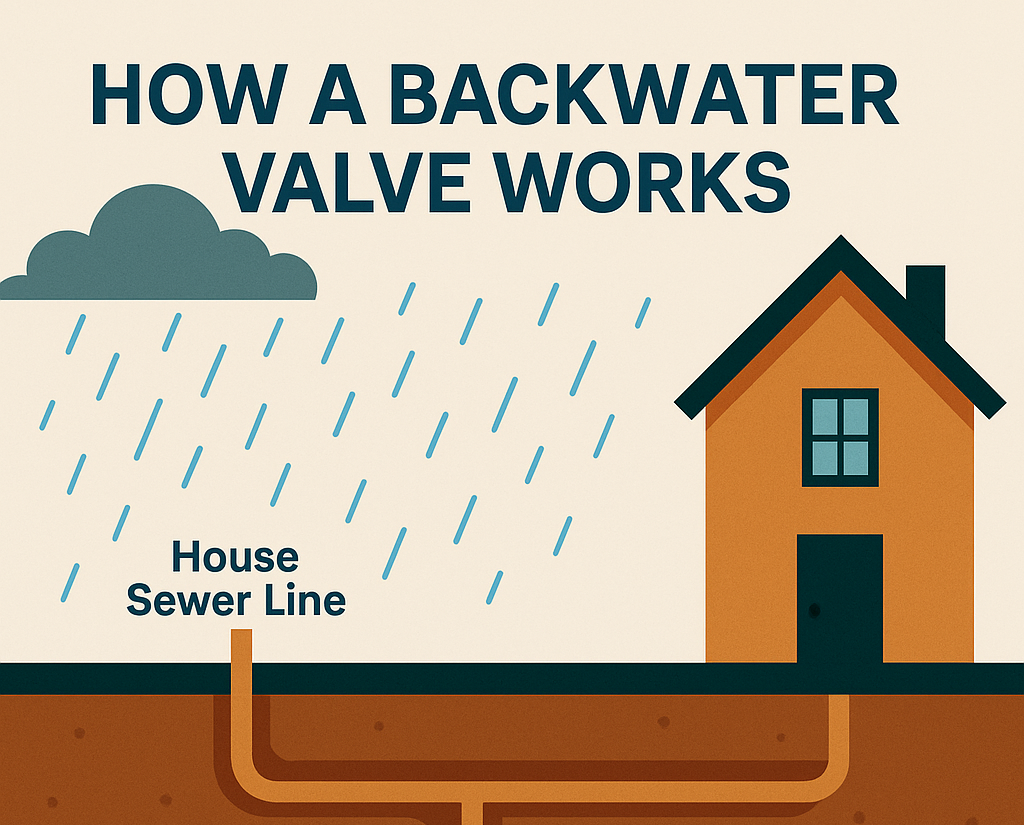
If you’ve ever watched storm water rise down your street and thought, “I hope the basement holds,” you’re not alone. Sewer backups are one of Alberta’s most expensive and avoidable home disasters. The solution isn’t magic—it’s a backwater valve.
What a Backwater Valve Does (and Why You Want One)
A backwater valve is a simple mechanical device installed in your home’s main sewer line.
Under normal conditions, wastewater from your sinks, showers, and toilets flows out to the municipal system.
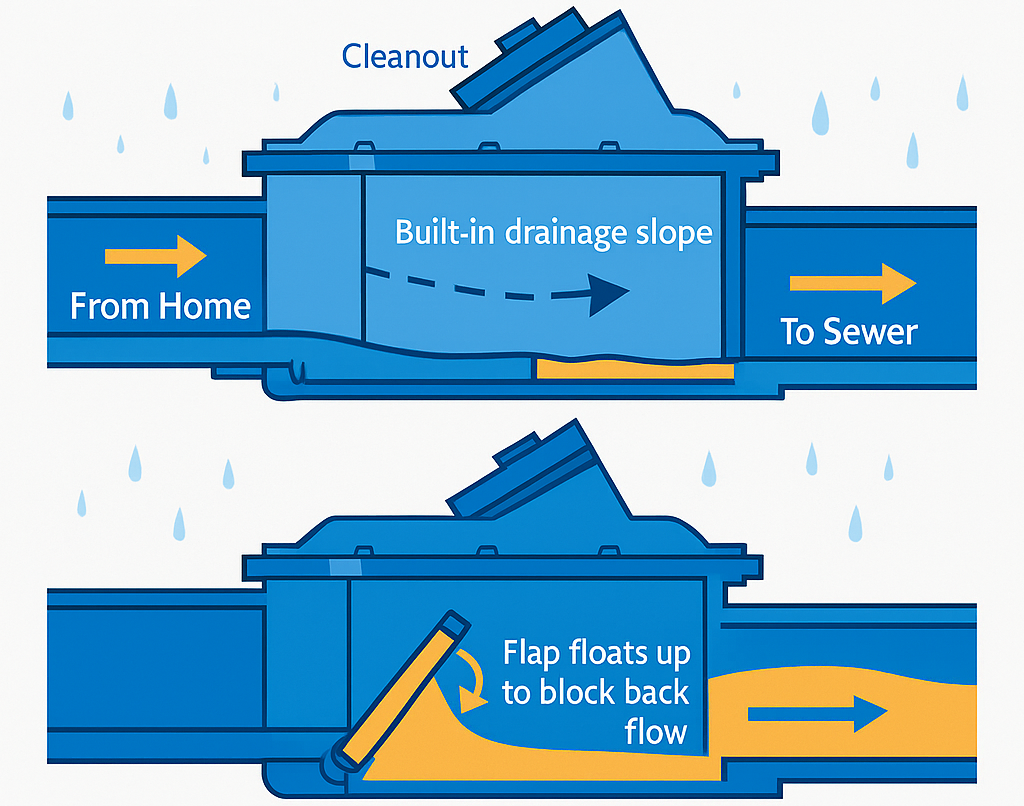
When a heavy rain overwhelms that system and pressure reverses, the valve’s flap lifts automatically, sealing the line and stopping sewage from flowing back into your basement.
Think of it as a one-way door: your waste can leave, but city sewage can’t come home for a visit.
How It Works
Normal day: Flap stays open, letting wastewater flow freely.
During a backup: Rising sewer pressure pushes the flap shut.
After the storm: Pressure drops, flap reopens, system returns to normal.
That’s it—a mechanical gate protecting your home’s lowest drains from an ugly surprise.
Types of Backwater Valves
Mainline (Normally Open): Installed in the home’s main sewer —most common and recognized by cities and insurers.
Retrofit Fullport Models: Designed for older homes where digging is limited; require only a small section of floor removal.
Adapt-A-Valve: Can be installed outside the house, reducing disruption to finished basements.
Smart Sensor Systems: Newer electronic versions inflate a small bladder when backup is detected, self-test weekly, and even send alerts if something’s wrong.
Pros
Cons
Needs periodic inspection/cleaning
Retrofit can require floor excavation
If used improperly (e.g., during storms), may cause “self-flooding”
Prevents sewer backup and major water losses
Often qualifies for insurance discounts
Lifespan of 20+ years with maintenance
May be required in new builds
Maintenance 101
Your valve can fail silently if it’s never checked. Twice a year:
Remove the clear cap and inspect with a flashlight.
Clean out debris or grease buildup.
Check that the flap moves freely.
Replace O-rings if cracked or worn.
Reseal the cap tightly.
Never pour fats, oils, or grease (“FOGs”) down drains—they’re the #1 cause of valve failure.
Water Use During Storms
When your valve closes, it also traps your home’s outgoing water. That means don’t:
Run laundry, showers, or dishwashers.
Flush toilets repeatedly.
Doing so can create pressure in your own system and flood you from within (called self-flooding). Wait until rain eases and the valve reopens.
Our Take
A backwater valve is one of the smartest investments you can make. It can’t stop rain, but it can stop sewage. For most Alberta homes, that’s the difference between a mop-up and a full gut job.
If you’re not sure whether your home already has one, or if your insurer offers a discount for installing one, talk to a McDonalds Insurance broker.