
Why Wind Doesn’t Care About Your “Sturdy” Home
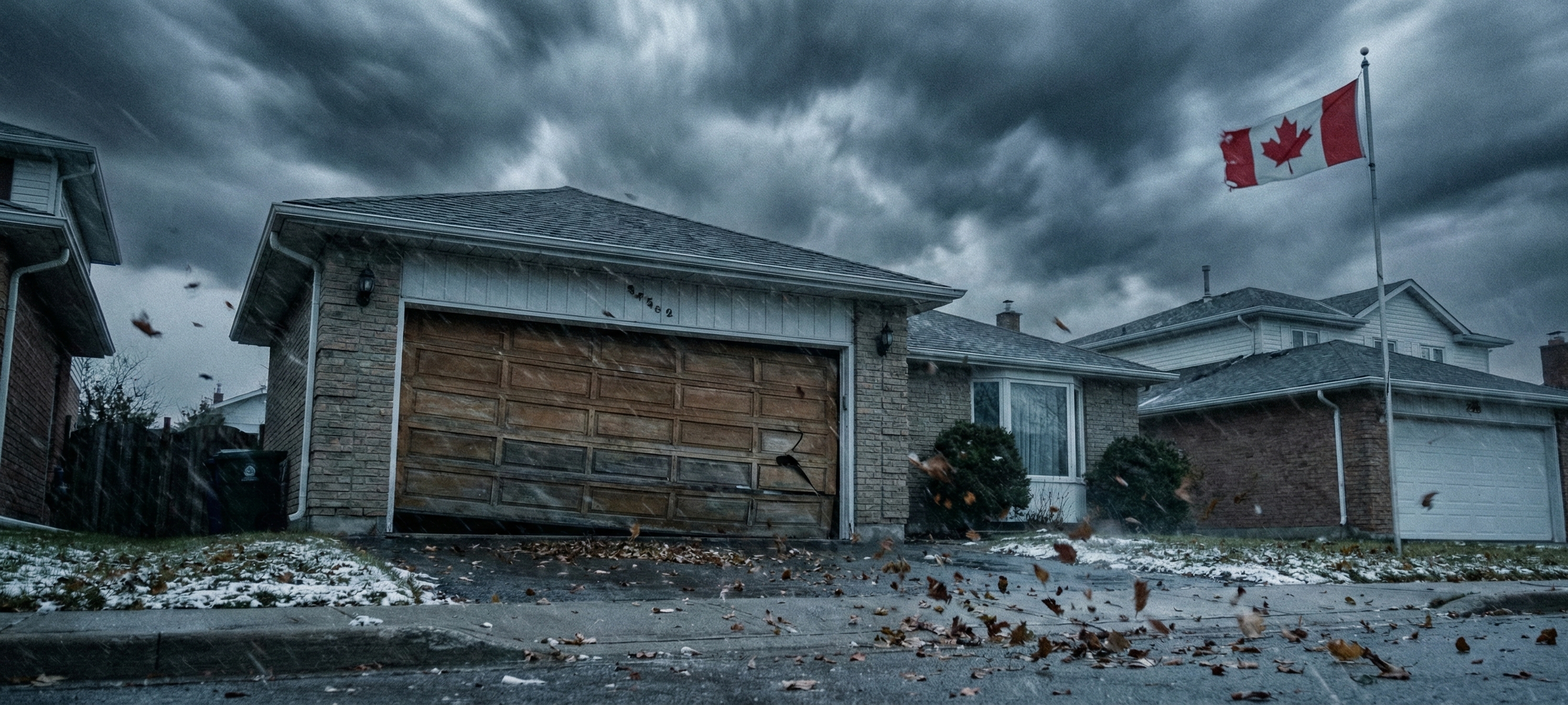
We spend a lot of time worrying about snow load in December, mostly because we have to shovel it. But while you’re staring at the clouds waiting for flakes, the wind is plotting to turn your shingles into Frisbees.
Canada actually experiences more tornadoes than any other country except the U.S.. But even without a full-blown twister, winter storms bring flat-line winds and microbursts that can do just as much damage to your bank account.
Before the ground freezes solid and you refuse to go outside until April, take a walk around your property. Here is how to wind-proof your home against the invisible bully.
The Roof: It Wants to Fly
It sounds dramatic, but physics is rarely on your side here. According to Bernoulli’s principle, as wind speeds up over your roof, pressure drops, creating uplift. Essentially, your roof acts like an airplane wing and attempts to "take off" from the rest of the building.
Check the Soffits: When soffits are blown out, it opens your attic to wind-driven rain and snow.
If you have panels longer than 12 inches, ensure they have a wood support in the middle.
Secure the Vents: Ridge vents are often the last thing installed and the first thing to rip off.
Ensure they are rated for high winds and properly fastened to the deck.Brace the Gables: If you have a gable roof (the triangular style), it is much more susceptible to wind damage than a hip roof because it presents a flat obstacle to the wind.
The Garage Door: The Weakest Link
We often forget about the garage door, but it is usually the largest and weakest opening in your entire house.
If your garage door fails during a storm, the full fury of the wind enters the house, causing internal pressure to spike. This can literally blow the roof off your home from the inside out.
Check the Sticker: Look for a sticker on your garage door indicating its pressure rating.
Retrofit It: If it’s not rated, you can install horizontal bracing kits or heavier hinges to strengthen it. Do this before a blizzard hits, not while you are trying to park in one.
Yard Cleanup: Don’t Arm the Storm
A significant portion of wind damage isn't caused by the air itself, but by airborne debris. That patio umbrella you left out? That’s a missile waiting for a launch code.
Anchor Everything: Utility sheds, gazebos, and outdoor accessories need to be securely anchored. Gravity is not a safety system.
Trim the Trees: Dead or rotted branches will come down eventually. You want to control when that happens, not let a 100km/h gust decide for you.
Gravel vs. Bark: If you are landscaping, consider shredded bark instead of gravel. In high winds, gravel becomes buckshot; bark just becomes a mess.
The Bottom Line
Wind damage is messy, loud, and often leads to water intrusion that ruins insulation and drywall. Winter is hard enough without a skylight you didn't ask for.
If you are unsure if your siding or outbuildings are covered for windstorm damage, give us a call. We’ll check your policy to make sure you’re protected when the weather gets pushy.